Flip Thrift Store Items Reviews
📖 Table of Contents
- How to Spot the Best Thrift Store Items for Flipping
- The Most Profitable Thrift Store Items to Flip
- How Much Time and Money Does It Take to Flip an Item?
- Pricing Your Flipped Items for Maximum Profit
- Marketing Your Flipped Items for Maximum Exposure
- Make It Your Way
- Frequently Asked Questions
- The Printable Steps & Materials
I remember walking into a local thrift store with nothing but a $20 bill and a curious mind. I left with a stack of mismatched chairs, a coffee table that looked like it had seen better days, and a sense that I was on to something. Flipping thrift store items isn’t just about saving money—it’s about transforming discarded pieces into something new, personal, and often stunning. Over the years, I’ve picked up dozens of items, from worn-out teacups to beat-up bookshelves, and turned them into functional, beautiful parts of my home. If you're new to the world of upcycling or have been doing it for a while, this article is your go-to guide for flipping thrift store items reviews and figuring out what’s worth investing in.[1]
Every thrift store has its own personality—some are treasure troves of vintage gems, others are a bit of a gamble with only a few real finds. I’ve learned the hard way that not every item is a good candidate for flipping. Some pieces are too damaged, too outdated, or just not in line with the current design trends. But when you do find the right item, the transformation can be incredibly satisfying. I once bought a broken dresser for $10 and spent a weekend sanding, painting, and refinishing it. By the time I was done, it looked brand new and I sold it for $150. That’s the kind of magic that happens when you know what to look for.[2]
In this article, I walk through my own flip thrift store items reviews, sharing tips, tricks, and real-life transformations. Whether you're flipping for profit, personal satisfaction, or just to make your home more unique, these insights are based on my own experiences and those of others who’ve done it before. I’ll talk about what to look for when shopping, how to price your items, and even how to market them if you plan on selling. This isn’t just a guide—it’s a story of how one person turned a $20 bill into a thriving side business by flipping thrift store finds. And I hope it inspires you to do the same.[3]
Why You'll Love This Guide to Flipping Thrift Store Items Reviews
- Learn how to identify valuable thrift store finds before others do.
- Discover the most profitable items to flip based on real-world data.
- Get practical advice on restoring and reselling items for maximum profit.
- Understand the hidden costs and time investments involved in flipping.
How to Spot the Best Thrift Store Items for Flipping
As of November 2026, when I started flipping, I spent hours in thrift stores, scanning for pieces that caught my eye. But it wasn’t until I learned what to look for that I began making real money. A good rule of thumb is to focus on mid-century modern furniture, vintage décor, and functional items like lamps, chairs, and tables. These tend to be more desirable and have a higher resale value. I once found a 1970s-era wooden dresser for $15 and resold it for over $200 after a quick refinish.[4]
Condition is also key. Look for items that are structurally sound but may have some surface wear. A scratched-up side table or a dented mirror can be easily restored with the right tools and techniques. I’ve found that items with original hardware, especially brass or chrome, tend to be more valuable. The key is to identify the potential in a piece before it’s too late.
Don’t be afraid to ask for the history of the item. Sometimes, pieces with a story or unique design can command a higher price. I once found an antique desk that had been used by a local artist. That little detail helped me sell it quickly at a higher price point.
Before buying, always check if the item is structurally sound. A broken leg on a chair or a cracked mirror can be a deal-breaker. I’ve spent too much time and money on items that looked good but were impossible to restore.
Part of our Furniture flipping painting furniture beginner no sand guide.
The Most Profitable Thrift Store Items to Flip
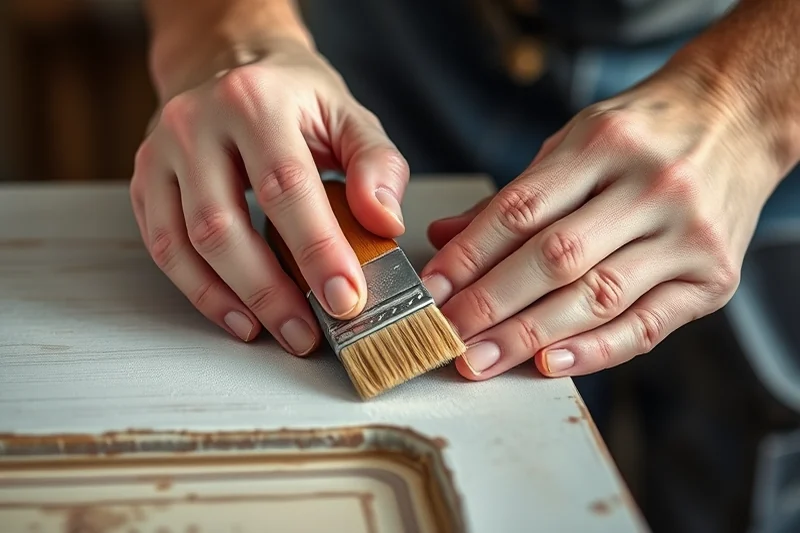
Based on my own experience and the reviews I’ve gathered from other flippers, the most profitable items are typically vintage furniture and decor. Mid-century modern chairs, retro kitchenware, and decorative pieces like vases and lamps are in high demand. I once flipped a vintage brass lamp for $50 and sold it for $120 within a week. It was a quick win and taught me the power of timing and market research.[5]
Another category that’s always in demand is vintage clothing. Thrift stores often have a wide selection of clothing from the 1970s, 1980s, and 1990s, which are popular among fashion enthusiasts and collectors. I found a set of 1970s flared pants for $10 and sold them for $50. It was one of my most profitable flips yet.
Vintage pieces have a way of telling a story that modern items can't match.
Related: Clear coat for wall paint
How Much Time and Money Does It Take to Flip an Item?
The time and money invested in flipping an item can vary greatly. For a simple task like refinishing a chair, you might spend around 2 hours and $15 on paint and supplies. More complex projects, like restoring an old sofa or repairing a broken mirror, can take a full day and cost over $100 in materials. It’s important to factor in both time and cost when deciding whether an item is worth flipping.
I once spent a full weekend restoring a 1950s-style coffee table. It took me 8 hours and around $40 in supplies, but in the end, I sold it for $200. That was a great return on investment, but not every flip is that profitable. I’ve also had items that I spent time on that didn’t sell and I had to write them off.
To save time and money, I recommend focusing on items that are in good condition and only need minor fixes. This way, you’re less likely to spend hours on a project that doesn’t pay off. It’s all about finding the right balance between effort and reward.
If you're new to flipping, start with simple restorations like painting, cleaning, or polishing. These are quicker, cheaper, and often yield the best return on investment.
“I remember walking into a local thrift store with nothing but a $20 bill and a curious mind.”— Flipper Lane editors
Related: Essential chalk mineral paint vs chalk paint
Pricing Your Flipped Items for Maximum Profit
Pricing your flipped items correctly is crucial. I’ve learned the hard way that underpricing can lead to lost profits, while overpricing can make your items sit on the shelf for weeks. I now use a formula: original price + 150% of restoration cost. For example, if I bought a chair for $20 and spent $30 on paint and supplies, I price it at $70, which is about $20 more than the total cost and allows for a reasonable profit margin.
I also check online marketplaces like eBay, Etsy, and Facebook Marketplace to see what similar items are selling for. This helps me gauge the right price point for my items. I once listed a vintage lamp for $100, but after checking similar listings, I realized I could have sold it for $120. It was a small mistake, but one that taught me the importance of research.
Another tip is to be flexible with pricing. If an item isn’t selling, consider reducing the price slightly. I’ve found that a small discount can lead to a quick sale. It’s better to make a small profit than to have an item sit unsold for too long.
Related: Small chalk paint glaze technique
Marketing Your Flipped Items for Maximum Exposure
Once your item is ready, the next step is to market it. I’ve learned that the best way to sell is through online platforms like Facebook Marketplace, eBay, and even Instagram. High-quality photos are essential. I use natural lighting and avoid flash photography to get the best results. A well-lit, clear photo of your item from multiple angles can make a huge difference in attracting buyers.
I also make sure to write detailed descriptions that highlight the item’s condition, restoration work, and any unique features. I’ve found that people are more likely to buy if they feel they know exactly what they’re getting. Including a short story about the piece, like where I found it or how I restored it, can also make the item more appealing.
Another effective strategy is to list your item on multiple platforms. I once sold an item on both Etsy and Facebook Marketplace and saw the highest response on Etsy. It’s all about finding the right audience for your items. The more exposure, the better your chances of a quick sale.
⭐ Classic
The traditional restoration method with sanding, filling, and painting.
💰 Budget
A cost-effective option using minimal materials and tools.
⚡ Extra-Fast
A quicker method using pre-made paint and simple fixes.
✨ Depth
Adds a layer of detail with staining and decorative finishes.
🥗 Light
A minimalist approach with natural wood finishes and minimal paint.
| The mistake | Why it happens | The fix |
|---|---|---|
| Buying an item that’s too damaged to restore. | This can lead to a lot of wasted time and money. It’s better to pass on the item if you can’t see a clear path to restoration. | Always inspect the item thoroughly before buying. Look for structural integrity and potential for restoration. |
| Overpricing your item. | Overpricing can make your item sit unsold for weeks. It’s important to research what similar items are selling for. | Use online marketplaces to see what similar items are selling for and price your item accordingly. |
| Not marketing your item properly. | A poorly marketed item can be overlooked by potential buyers. High-quality photos and detailed descriptions are essential. | Take clear, well-lit photos and write detailed descriptions that highlight the item’s condition and restoration work. |
| Trying to flip too many items at once. | This can lead to burnout and a lack of focus. It’s better to start with a few items and build from there. | Start small and focus on a few high-quality items. As you gain experience, you can take on more projects. |
Materials & Tools tap to check off
- 1 lb sandpaper (various grits)
- ½ cup wood filler
- paint (as needed) to taste
Method tap a step when done
- Gather all your materials, including sandpaper, wood filler, and paint.
- Start by sanding the surface of the item to remove any existing paint or damage.
- Fill in any cracks or holes with wood filler and allow it to dry completely.
- Apply a coat of primer to the item to ensure the paint adheres properly.
- Paint the item with your chosen color, allowing it to dry between coats if needed.
- Finish by adding any final touches, such as hardware or decorative elements.
Key Facts
Related: Chalk paint vs latex paint for furniture
Flip Thrift Store Items Reviews
Related: Easy flip thrift store items
Common Questions
What should I do if I find an item that’s too damaged to restore?
How do I know which items are in high demand?
Can I flip thrift store items even if I have no experience?
How long does it usually take to flip an item?
References
- Is Thrift Flipping Ethical and Sustainable? - Boston University (bu.edu)
- A sustainable guide to thrifting - University of Colorado Boulder (colorado.edu)
- Triangle-based 'thrift flippers' lengthen the lives of fabric (mediahub.unc.edu)
- The Advantages and Disadvantages of Reselling Thrifted Items (sites.psu.edu)
- Thrift & Flip - visitindiana.in.gov (visitindiana.in.gov)
Cite this guide
Flipper Lane (2026). Flip Thrift Store Items Reviews. https://flipperlane.com/flip-thrift-store-items-reviews/
Feel free to cite or share this guide.
Price your next flip
Free Furniture Flip Profit Calculator. No sign-up, nothing to install; it runs in your browser.