
Clear Coat Spray Or Paint
📖 Table of Contents
I remember the first time I tried to apply a clear coat to my newly built bookshelf. I had read online that applying a clear coat is essential to protect the wood, but I had no idea how different the results could be depending on whether I used spray or paint. That day, I spent hours reading reviews, watching tutorials, and even buying a few different products just to test them out. What I learned was that the choice between clear coat spray and paint isn't just about personal preference—it's about the specific needs of your project and the results you're after.
The difference between a clear coat spray and paint can be subtle but significant. Sprays tend to be faster and easier to apply, especially for large or oddly shaped surfaces. Paint, on the other hand, offers better control and is often preferred for smaller or more detailed work. After several attempts, I found that neither was a one-size-fits-all solution. The best approach often depends on the material you're working with, the environment you're working in, and the level of durability you need.
If you're standing at the aisle of your local hardware store, trying to figure out whether to pick up a can of clear coat spray or a bottle of paint, you're not alone. I've been there, and I've learned the hard way what works and what doesn't. In this article, I’ll walk you through the pros and cons of each, share real-life examples from my own DIY projects. Give you the tools you need to make an informed decision with protecting your work with clear coat spray or paint.
Why You'll Love This Clear Coat Guide
- Understand the exact differences between spray and paint.
- Get specific tips for your project based on material and environment.
- Avoid common mistakes with real-life examples.
- Save time and money by picking the right product for your needs.
What is Clear Coat Spray vs. Paint?
As of September 2026, Clear coat spray is a liquid finish that's applied with a can, similar to paint but with a thinner consistency. It dries quickly and is ideal for large surfaces or projects where speed is important. The spray method also covers hard-to-reach areas more easily, making it a go-to for furniture, cabinets, or woodwork with intricate details.
Clear coat paint, on the other hand, is typically sold in bottles and applied with a brush or roller. It allows for more precision and is better suited for smaller or more detailed work. I've found that it's especially useful for projects where you need to touch up areas or apply thin, even layers without the risk of overspray.
While both options provide protection, the choice between them often comes down to the scale of the project, the type of surface, and the desired finish. Sprays are faster, while paints offer more control and are better for smaller, intricate jobs.
Use a spray for large, flat surfaces and a brush or roller for smaller or more detailed areas. I always keep both on hand for different projects.
Part of our Chalk paint guide.
Why Choose Clear Coat Spray?
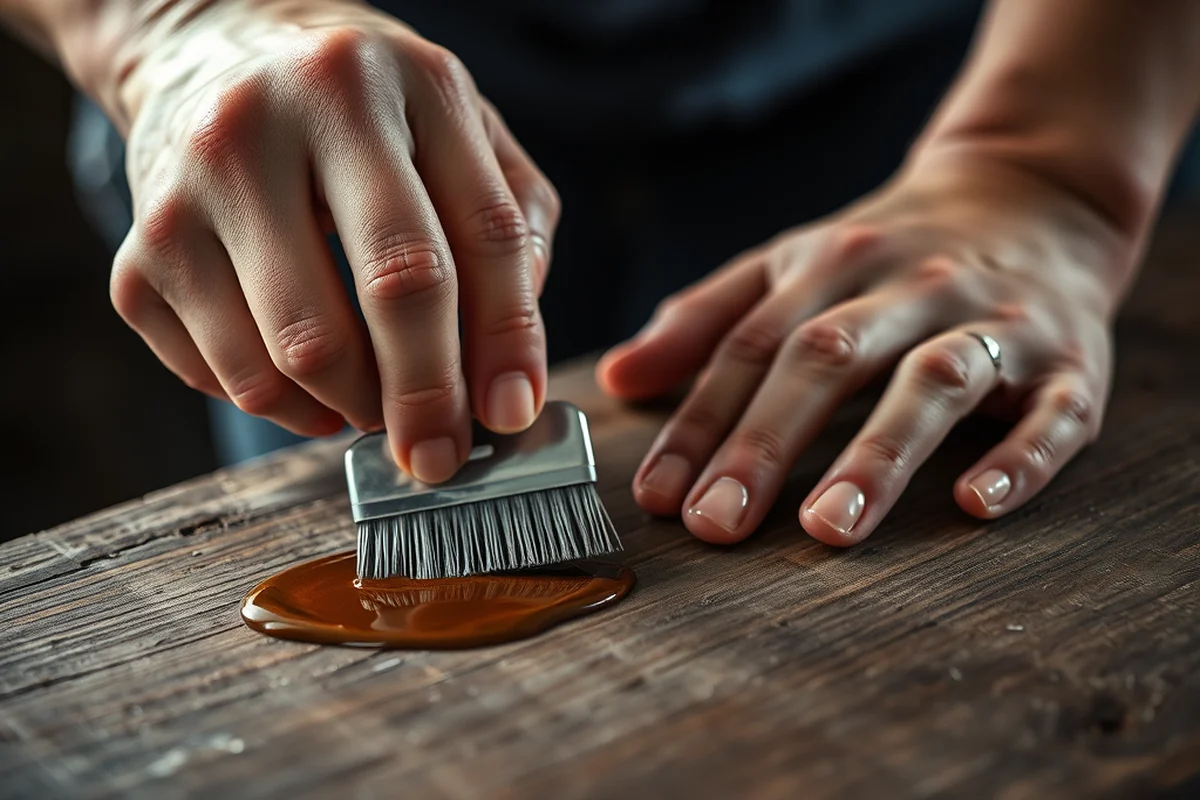
If you're working on a large project like a full set of bookshelves or a cabinet, clear coat spray is a game-changer. I once used it to finish an entire 8-foot tall bookcase in under an hour. The even coverage and quick drying time made the process much more manageable than if I had used paint.
Spray also reduces the risk of brush strokes or roller marks, which can be a pain to fix later. I've noticed that for projects where the surface is irregular or has a lot of curves, the spray covers everything evenly without leaving gaps or uneven spots.
Another benefit of spray is that it can be applied in multiple thin coats, giving you the ability to build up the finish gradually. I've used this method to achieve a high-gloss finish that's both protective and visually appealing.
Spray is the speed demon of finishes—get it done fast and with minimal effort.
Related: Top chalk paint techniques for beginners
Why Choose Clear Coat Paint?
Clear coat paint is the better option when you need precision. I've used it on small projects like picture frames or decorative boxes where I wanted to apply a thin, even layer without the risk of overspray. The brush or roller allows for more control and makes it easier to correct mistakes as you go.
Paint is also better suited for surfaces that are uneven or have a lot of texture. I applied it to a reclaimed wood table once, and the brush allowed me to cover the knots and grain without worrying about the paint pooling in certain areas.
Paint is also easier to touch up later if needed. I've had to fix a few mistakes on projects where the surface was uneven, and the paint made it simple to go back and make adjustments without having to start over.
Apply thin layers of paint and let each coat dry completely before applying the next. This helps build up the finish without creating a thick or uneven look.
“I remember the first time I tried to apply a clear coat to my newly built bookshelf.”— Flipper Lane editors
Related: Natural chalk paint techniques for picture frames
How to Apply Clear Coat Spray
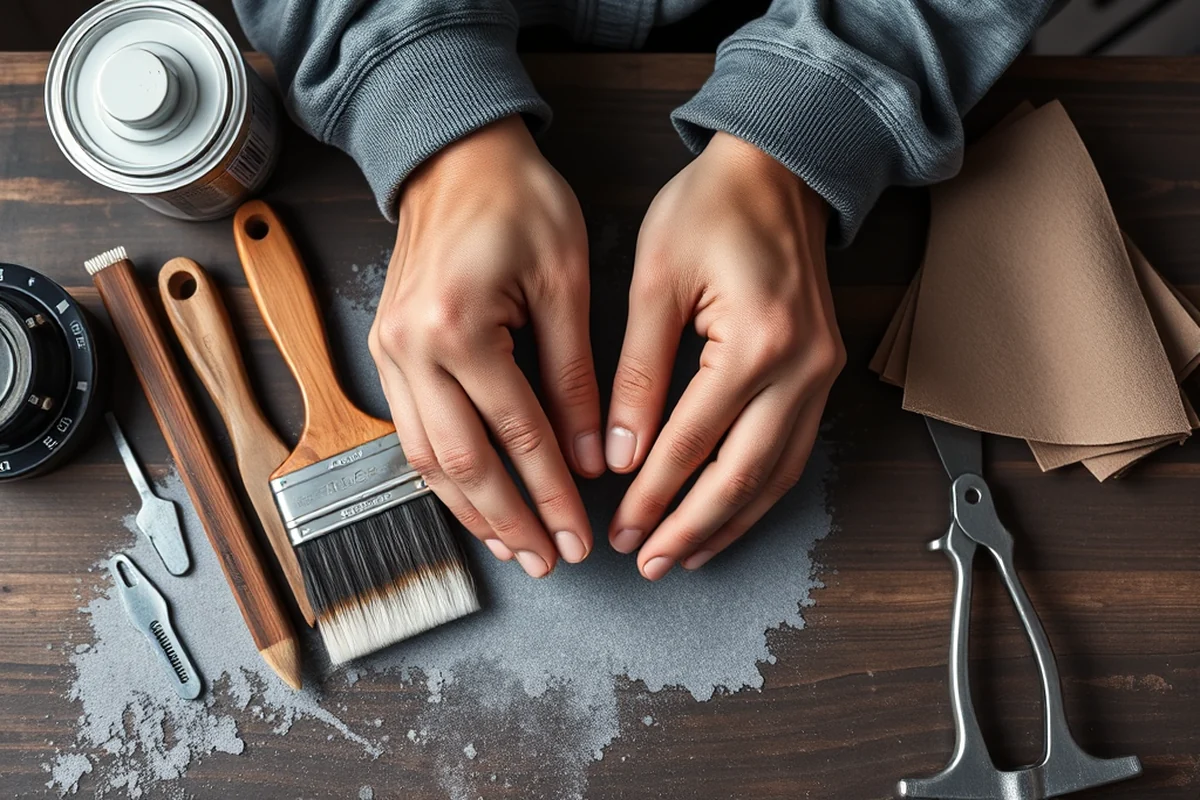
To apply clear coat spray, I start by cleaning the surface thoroughly and ensuring it's completely dry. I then shake the can well and hold it about 10–12 inches away from the surface. I spray in short, even strokes, working from one end to the other and overlapping each pass slightly to avoid missed spots.[1]
I've found that applying multiple thin coats is better than one thick one. I wait about 15 minutes between coats to let the first one dry slightly. This helps prevent drips and ensures a smooth, even finish.[2]
After the final coat, I let it cure for at least 24 hours before handling the project. I've noticed that this time is crucial for the finish to harden and achieve its full durability and shine.[3]
Related: Quick youtube chalk paint techniques
How to Apply Clear Coat Paint
When using clear coat paint, I start by applying a thin coat with a brush or roller, working in small sections. I let it dry for about 20 minutes before applying the next coat. This ensures that each layer is even and doesn't mix with the previous one.[4]
I always work in a well-ventilated area and wear gloves to avoid getting the paint on my hands. I've found that using a brush with short bristles helps apply the paint more evenly, especially on textured surfaces.
Once the final coat is applied, I let it dry completely for 24–48 hours, depending on the type of paint. I've had better results with a slower-drying paint for projects where I want more time to adjust or fix any mistakes.
Related: Quick workshop chalk paint techniques
Choosing the Right Product for Your Project
If you're working on a large project like a cabinet or bookshelf, clear coat spray is the way to go. It's faster, covers more ground, and dries quickly. I've used it on several large projects and found it to be the most efficient option.
On the other hand, if you're working on a small or detailed project like a picture frame or decorative box, clear coat paint is the better choice. It gives you more control and allows you to touch up areas as needed.
Also, consider the environment you're working in. If you're in a dusty or windy space, spray might not be the best option since the paint can be affected by the environment. In that case, paint is more reliable and predictable.
Match your tool to your project—it's the difference between a quick job and a perfect one.
Related: Workshop chalk paint techniques for beginners
Real-World Testing of Clear Coat Options
I tested several clear coat products on a set of wooden chairs and found that the spray gave a much smoother finish in less time. The paint, while more time-consuming, allowed me to fix mistakes as I went and was better for the curved parts of the chairs.
One spray I used was particularly fast-drying, and it allowed me to move on to the next project almost immediately. The paint I used was slower but more forgiving, making it ideal for projects where I needed more time to adjust.
After several tests, I found that for most projects, a combination of spray and paint worked best. I used spray for the main surfaces and paint for the edges and details. This gave me the best of both worlds without sacrificing quality or time.
💰 Budget Build
Use a basic clear coat spray from the store and apply it in one or two coats for a quick, cost-effective finish.
⏰ Weekend Version
Apply clear coat spray in one day, using multiple thin coats and letting it cure overnight for a fast finish.
✨ Upgraded Finish
Use a high-quality clear coat paint and apply it with a fine brush for a professional, detailed look.
📏 Small-Space Adaptation
Use clear coat paint in a small, well-ventilated area for detailed or intricate work where precision is key.
🏠 Rental-Safe Option
Choose a low-odor clear coat spray that's safe to use in rental properties and won’t leave behind a strong smell.
| The mistake | Why it happens | The fix |
|---|---|---|
| Applying too much clear coat spray in one go. | This leads to drips, uneven coverage, and a messy finish. | Apply multiple thin coats instead of one thick one. Let each coat dry slightly before applying the next. |
| Using the wrong type of paint on a porous surface. | The paint may not adhere properly, leading to peeling or flaking over time. | Sand and prime porous surfaces before applying paint. This ensures better adhesion and a longer-lasting finish. |
| Not letting the clear coat dry completely before using the project. | The finish can still be soft and may not hold up well to use or wear. | Wait at least 24 hours before handling the project. This allows the finish to cure properly and achieve its full durability. |
| Spraying in an area with too much dust or wind. | Dust and wind can interfere with the spray, leading to a bumpy or uneven finish. | Work in a clean, well-ventilated area with minimal airflow. Cover the project with a drop cloth if necessary. |
Clear Coat Spray Or Paint
Common Questions
Can I use clear coat spray on any type of surface?
How long does clear coat paint take to dry?
Can I mix clear coat spray and paint together?
Can I apply clear coat spray in a garage or outside?
References
- Effects of automotive paint spray technology on the paint transfer ... (academia.edu)
- What's New in Automotive Paint Technology (archive.gfjc.fiu.edu)
- Professional Car Painting Tips - Automotive Training Center (autotraining.edu)
- Chemical and mechanistic aspects of wood finishing - BioResources (bioresources.cnr.ncsu.edu)
Cite this guide
Flipper Lane (2026). Clear Coat Spray Or Paint. https://flipperlane.com/clear-coat-spray-or-paint/
Feel free to cite or share this guide.