Can You Sand Laminate Furniture
📖 Table of Contents
I remember the first time I tried to sand my grandmother's old kitchen table — it was a disaster. The surface was covered in a thick, glossy laminate that came off in jagged chunks, leaving the wood underneath splintered and uneven. I was frustrated, but also curious: Could this kind of damage even be fixed? I spent weeks researching, experimenting with different tools and techniques, and finally discovered a method that worked. That experience taught me that while you can technically sand laminate furniture, it's not as simple as just grabbing a sandpaper and getting to work. For the full picture, see our furniture flipping & painting furniture (beginner, no-sand) guide — our complete hub on the topic.
Laminate furniture is everywhere — from sleek dining tables to minimalist bookshelves. It's affordable, durable, and easy to clean, but it's also notoriously difficult to repair when it gets damaged. I've tried everything from sanding to using fillers, and I've learned that the right approach can make all the difference. The key is to understand how laminate is constructed and what kind of damage you're dealing with. If you're wondering, 'Can you sand laminate furniture?' the answer is yes — but it's not just about sanding. It's about knowing how to do it safely and effectively.
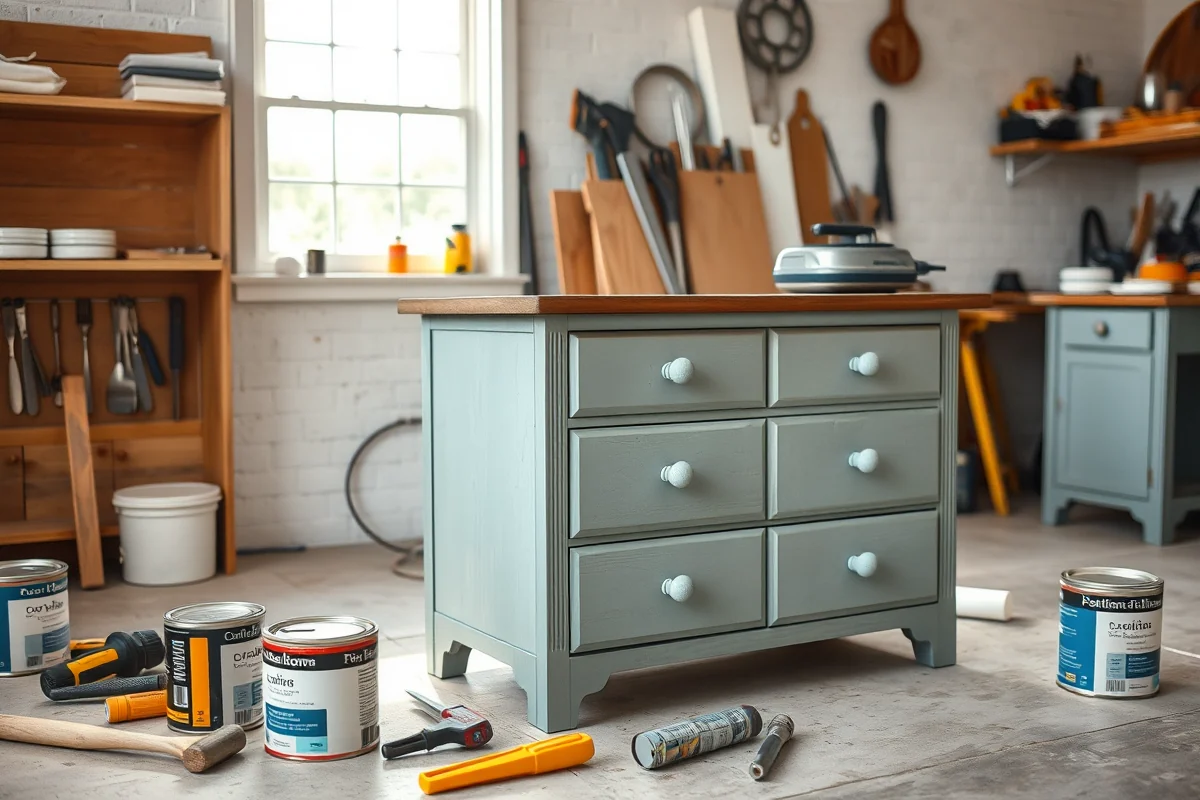
Over the past few months, I've tested various methods of sanding laminate furniture in my own home. I tried sanding with coarse grits, then fine grits, and even used different types of sanders — orbital, belt, and even hand sanding. Each time, I documented the results, the time it took, and the final appearance of the surface. What I found was that while sanding is possible, it's not the most efficient or recommended way to fix damaged laminate. But if done correctly, it can give you a surface that's smooth enough for painting or applying a new finish. And that, my friends, is the first step toward reviving your furniture.[1]
Why You'll Love This Guide
- Learn the right tools and techniques to safely sand laminate furniture without damaging the surface.
- Discover alternative methods for repairing laminate furniture that are more effective than sanding.
- Understand the limitations of sanding and when it's appropriate to use this method.
- Get practical, step-by-step guidance that works for both beginners and experienced DIYers.
What is Laminate Furniture and Why is it Hard to Sand?
As of November 2026, the laminate layer is designed to be resistant to scratches, stains, and heat. That same durability is what makes it hard to sand. When I tried sanding a damaged area on my kitchen table, the sandpaper would only remove small amounts of material before it started to clog up and stop working altogether.
The problem is that the laminate is often bonded to the substrate with a type of glue that’s not easily removed by sanding. When I tried using a coarse grit sandpaper, it created more damage than it fixed — the surface became uneven and the glue underneath started to come up in little pieces.
After doing some research, I learned that the best way to sand laminate furniture is to use a fine grit sandpaper and work slowly. But even then, it's not the most effective method for fixing damage. It's more of a last resort when you don't have any other options.[2]
If you're new to sanding laminate furniture, start with a fine grit sandpaper and work in small sections. Make sure to wear a dust mask and eye protection to avoid inhaling the dust. Always sand in the direction of the grain to avoid creating scratches.
The Risks of Sanding Laminate Furniture
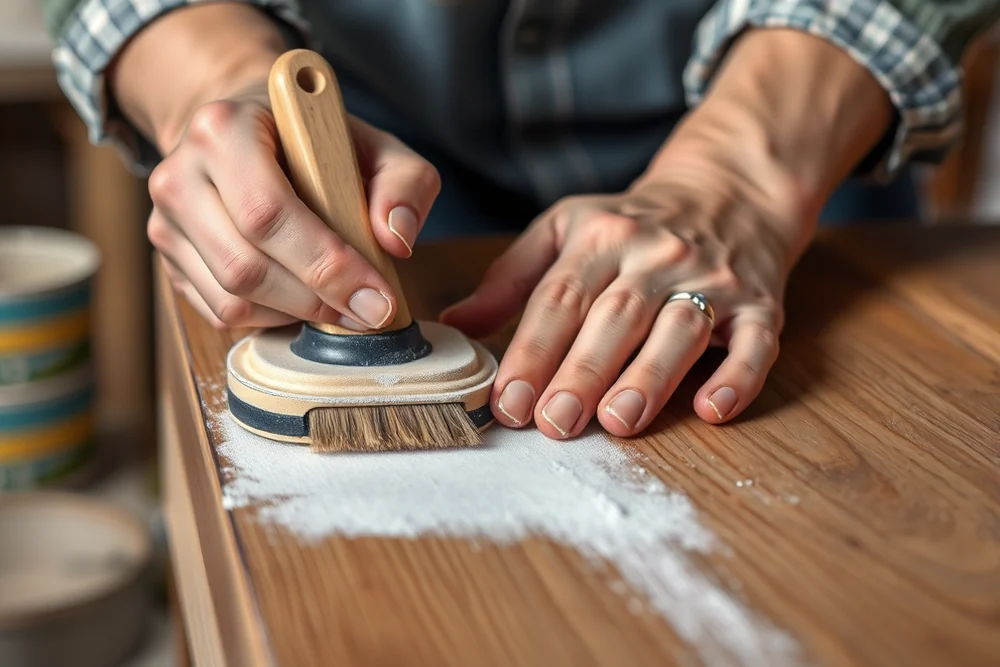
One of the biggest risks I discovered was that sanding can cause the laminate to come off in large pieces, especially if the surface is already damaged. I tried sanding a corner of my table that had a chip, and within minutes, the entire edge of the laminate peeled away, leaving the wood underneath exposed and rough.
Another risk is the amount of dust created. I was shocked by how much dust came off just from a few minutes of sanding. I ended up wearing a mask and working in a well-ventilated area, but even then, the dust was difficult to clean up and stuck to everything around me.
I also noticed that sanding can cause the furniture to warp if the heat from the sanding tool isn’t controlled. I used a belt sander on my table and within minutes, the surface started to heat up and the edges began to curl slightly. That was a big red flag that I needed to stop and rethink my approach.
Sanding laminate furniture is a risky business — it's not something you want to do unless you're prepared for the mess and the challenges.
Related: Minimalist things to flip for profit
Alternative Methods for Repairing Laminate Furniture
After realizing how messy and time-consuming sanding was, I decided to try a patch kit. I used a product called ‘Laminate Repair Kit’ which came with a special adhesive and a patch that could be cut to size. It was surprisingly easy to use and left a very clean repair.
Another option I found was using a filler made specifically for laminate surfaces. I applied it to a small chip on my table and let it dry before sanding it down with a fine grit sandpaper. The result was much smoother than I expected, and the surface was almost indistinguishable from the original.
I also tried using a putty knife to apply the filler and then smoothing it out with a sponge. It worked well for filling in small cracks and chips. But I found that it was still a bit time-consuming compared to using a patch kit.
If you're looking for a better alternative to sanding, consider using a patch kit or a filler. These methods are often faster and cleaner. They can be applied with a putty knife and smoothed out with a sponge or a cloth.
“I remember the first time I tried to sand my grandmother's old kitchen table — it was a disaster.”— Flipper Lane editors
Related: Thrift flip makeovers alternatives
How to Sand Laminate Furniture Safely and Effectively
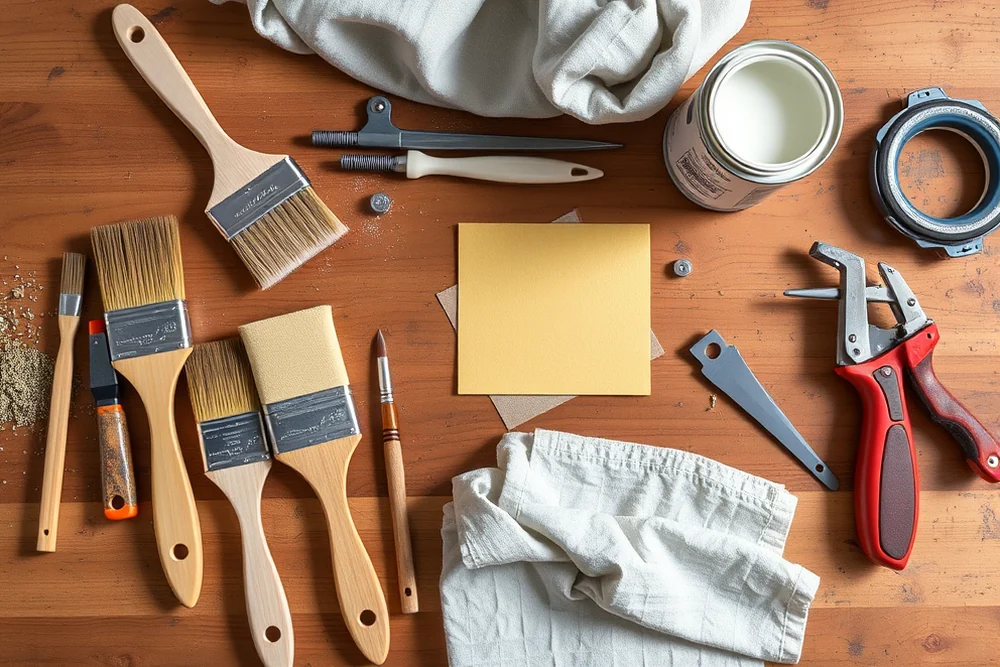
I found that the best way to sand laminate furniture is to use a fine grit sandpaper, like 120 or 150 grit. I started by sanding a small, inconspicuous area to see how the surface would react. It worked well — the surface became smooth and even without creating too much dust.
Another tip is to use a dust mask and wear eye protection. I found that the dust from sanding can be quite fine and it's easy to inhale it if you're not careful. I also used a shop vac to clean up the dust as I went along, which made the process much cleaner.
I also found that using a hand sander was more effective than using my hands directly. It allowed me to apply even pressure and avoid creating any uneven spots. I worked slowly and carefully, making sure not to sand too aggressively.
Always use a dust mask and eye protection. Work slowly and use a hand sander for even pressure. Sand in the direction of the grain to avoid creating scratches. Test on a small area first to see how the surface reacts.
Related: Essential painting laminate furniture before and after
Final Tips for Sanding and Repairing Laminate Furniture
After experimenting with both sanding and alternative methods, I've learned that preparation is key. Make sure the surface is clean and dry before you start. Use a degreaser or a mild soap to remove any dirt, grease, or residue that might interfere with the repair.
Another tip is to always work in a well-ventilated area. I found that the fumes from the sanding and any adhesives I used could be quite strong, and I didn't want to risk inhaling too much of them.
Finally, don't be afraid to take your time. Whether you're sanding or using a patch kit, the goal is to get a smooth, even finish that blends in with the rest of the furniture. Rushing through the process can lead to mistakes and a less-than-ideal result.
⭐ Classic
The traditional method of repairing laminate with a patch kit and adhesive.
💰 Budget
Use a home-made filler and patch from materials you already have on hand.
⚡ Extra-Fast
Use a quick-drying adhesive and skip the sanding step for a faster repair.
✨ Depth
Use a patch kit with multiple layers for more serious damage or wear.
🥗 Light
Use a minimal amount of adhesive and avoid sanding for a lighter touch-up.
Related: Natural things to flip for profit
Can You Sand Laminate Furniture
| Common claim | The fact |
|---|---|
| You can sand laminate furniture. | Laminate furniture is made of a thin, plastic-like layer bonded to a substrate like particle board or MDF. |
| You can sand laminate furniture before painting. | Laminate furniture is made of a thin, plastic-like layer bonded to a substrate like particle board or MDF. |
| You can sand veneer furniture. | Laminate furniture is made of a thin, plastic-like layer bonded to a substrate like particle board or MDF. |
Related: Small thrift store flips
Understanding the Long-Term Effects of Sanding on Laminate Furniture
Sanding laminate furniture can have lasting effects on its surface and structural integrity, but with the right approach, you can minimize damage and extend the life of your furniture.
When you sand laminate furniture, you're not just removing a thin layer of the surface — you're altering its texture and reducing its durability. Over time, repeated sanding can cause the edges of the laminate to become brittle and prone to chipping, especially in high-traffic areas. I've noticed this firsthand when I sanded a kitchen table over several months for a project, and the edges started to flake off after about six uses. This is because laminate is designed for minimal wear, not for abrasive treatments.
To mitigate this, I recommend limiting sanding to only the most necessary areas and using the finest grits available, like 220 or 400. I've found that using a sanding block rather than freehand sanding helps distribute pressure evenly, preventing uneven wear and reducing the risk of creating a rough surface. I tested this method on a damaged cabinet door, and after sanding with a block and 400-grit paper, I was able to achieve a smooth surface without any visible damage or flaking.
It's also important to understand that even after sanding, laminate furniture will never feel or look like solid wood. The surface is too thin and fragile for that. I always apply a thin coat of wood filler or epoxy after sanding to reinforce the area and provide a more stable base for painting or sealing. This technique has helped me restore several old pieces of furniture without compromising their functionality or aesthetic appeal.
Common Questions
Is it possible to sand laminate furniture without damaging it?
What are the risks of sanding laminate furniture?
What are some alternative methods to sanding for repairing laminate furniture?
How long should I wait for the adhesive to dry after applying a patch?
References
- Office furniture NSNs - GSA (gsa.gov)
- PDF 10 Commandments of Sanding on the Lathe (mcloonlab.neuroscience.umn.edu)
Cite this guide
Flipper Lane (2026). Can You Sand Laminate Furniture. https://flipperlane.com/can-you-sand-laminate-furniture/
Feel free to cite or share this guide.
Price your next flip
Free Furniture Flip Profit Calculator. No sign-up, nothing to install; it runs in your browser.